


Hey there! As a supplier of the Blowing Series, I often get asked about the power consumption of these machines. It's a crucial factor for businesses looking to invest in such equipment, as energy costs can significantly impact the bottom line. So, let's dive right in and explore what the power consumption of the Blowing Series really looks like.
First off, it's important to understand that the power consumption of the Blowing Series can vary depending on several factors. These include the type of machine, its size, the production capacity, and the specific operating conditions. For instance, a smaller Blowing Bottle Machine with a lower production rate will generally consume less power than a larger, high-capacity model.
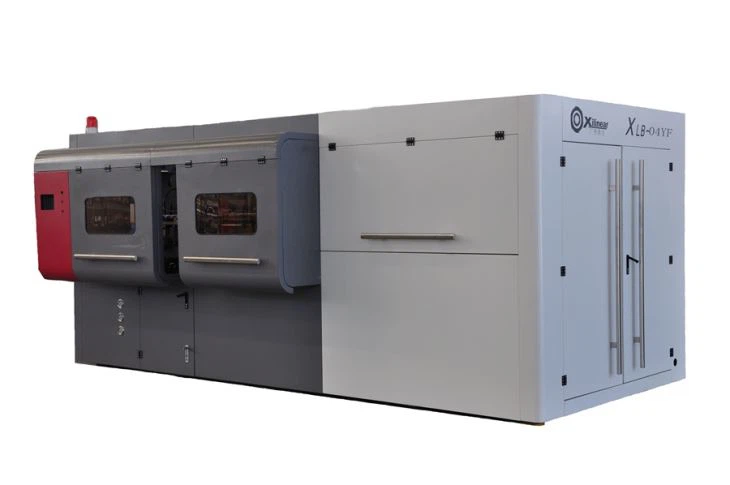
Let's start by taking a closer look at the different types of machines in the Blowing Series. One of the most popular options is the Fully Automatic PET Blow Moulding Machine. This machine is designed to produce PET bottles with high precision and efficiency. The power consumption of a fully automatic PET blow moulding machine can range from around 10 kW to 50 kW, depending on its size and production capacity.
Smaller models, which are suitable for small to medium-sized production runs, typically consume around 10 kW to 20 kW of power. These machines are often used by startups or businesses with limited production requirements. On the other hand, larger, high-capacity models can consume up to 50 kW or more. These machines are designed for large-scale production and are commonly used by major bottling companies.
Another type of machine in the Blowing Series is the Bottle Blowing Machine. This machine is more versatile and can be used to produce a variety of bottle shapes and sizes. The power consumption of a bottle blowing machine can also vary widely, depending on its specifications.
For a basic, semi-automatic bottle blowing machine, the power consumption might be around 5 kW to 10 kW. These machines are often used by small businesses or for custom bottle production. In contrast, a fully automatic, high-speed bottle blowing machine can consume anywhere from 20 kW to 40 kW or more. These machines are designed for high-volume production and are capable of producing a large number of bottles in a short period of time.
Now, let's talk about some of the factors that can affect the power consumption of these machines. One of the most significant factors is the production speed. The faster the machine operates, the more power it will consume. This is because the machine needs to work harder to produce bottles at a higher rate. For example, if you increase the production speed of a bottle blowing machine from 100 bottles per hour to 200 bottles per hour, the power consumption will likely increase as well.
The temperature and pressure settings also play a role in power consumption. Higher temperatures and pressures require more energy to maintain. For instance, if you need to produce bottles with a thicker wall or a more complex shape, you might need to increase the temperature and pressure settings, which will result in higher power consumption.
The efficiency of the machine's components is another important factor. Modern Blowing Series machines are designed with advanced technology and energy-efficient components to reduce power consumption. For example, some machines use servo motors, which are more energy-efficient than traditional motors. These motors can adjust their power consumption based on the actual load, resulting in significant energy savings.
In addition to the machine itself, the auxiliary equipment also contributes to the overall power consumption. This includes equipment such as air compressors, heaters, and cooling systems. Air compressors, in particular, can consume a large amount of power, especially if they are not properly maintained or sized for the machine.
So, how can you reduce the power consumption of your Blowing Series machine? One of the most effective ways is to optimize the production process. This includes setting the appropriate production speed, temperature, and pressure settings based on the requirements of the bottles you are producing. You can also schedule production during off-peak hours when electricity rates are lower.
Regular maintenance of the machine is also crucial. This includes cleaning the filters, lubricating the moving parts, and checking the alignment of the components. A well-maintained machine will operate more efficiently and consume less power.
Investing in energy-efficient equipment is another option. As mentioned earlier, machines with servo motors and other energy-saving features can significantly reduce power consumption. You can also consider using renewable energy sources, such as solar panels, to power your machines.
In conclusion, the power consumption of the Blowing Series can vary widely depending on the type of machine, its size, production capacity, and operating conditions. By understanding these factors and taking steps to optimize the production process and maintain the machine, you can reduce power consumption and save on energy costs.
If you're interested in learning more about the Blowing Series machines and their power consumption, or if you're looking to purchase a machine for your business, I'd be more than happy to help. Just reach out to me, and we can have a detailed discussion about your specific requirements. Let's work together to find the best solution for your bottling needs!
References

- Industry reports on plastic bottle manufacturing machinery
- Manufacturer's specifications for Blowing Series machines


